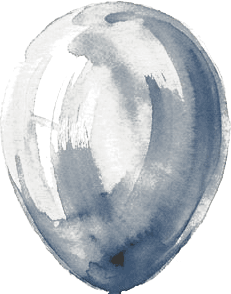
There is a metaphor I keep returning to, borrowed from a mother in our parents' group. Living with Type 1 Diabetes is like doing everything else you do in normal life — while also keeping a balloon in the air. The balloon never lands. You never put it down. The wind is invisible to everyone around you.
I qualified as a dietitian in my twenties and spent a decade in pharmaceutical and medical-device commercial roles before my eldest was diagnosed at two years and nine months old. I thought I understood the disease. I had built a career around understanding it, more or less. I was wrong about almost everything that mattered.
What I knew was numerics. What I learned, fast, was that the numerics live inside a household — inside a marriage, a sibling relationship, a school run, a birthday party, a 2 a.m. that the rest of the world is sleeping through. The household is where the balloon actually floats.
The household is where the balloon actually floats.
I have come to believe that this is the missing seat at most commercial tables in our category. We are a serious industry doing serious work, and yet our pricing models, our message houses, our launch playbooks, and our sales-enablement curricula often forget to put the parent at 2 a.m. in the room. We forget the spouse who is checking glucose between meetings. We forget the teenager who would rather pretend the disease away than wear another sensor at the school dance.
When I train field teams now, I ask them to imagine they are calling on the household, not the clinician. The clinician is a collaborator, of course — sometimes the most important one — but they are not the customer in any honest sense of that word. The customer is the family that has not slept properly since diagnosis, and will not until there is a cure.
The customer is the family that has not slept properly since diagnosis.
This is what commercial excellence in this category actually means, to me. It is not louder messaging. It is not slicker decks. It is the unglamorous, daily discipline of building teams who can hold the lived reality of the disease in mind while doing the unglamorous, daily work of a commercial organisation. Coaching. Capability-building. Patience. Curiosity. The ability to be wrong out loud and learn fast.
I will keep my children's balloons in the air for as long as I can. They will keep their own up after that, for the rest of their lives. The work I do at MiniMed, and at whatever comes next, is a small attempt to make that work — theirs and every other family's — a little less invisible, a little less heavy, a little less alone.